AeroChamp provides reverse engineering and product development solutions for defence aircraft parts, aerospace components, and mechanical and electronic sub-assemblies. Our process evaluates existing components, assemblies, and technical references to recreate designs, improve performance, extend service life, and develop reliable replacement or upgraded parts. For mechanical components, we use advanced inspection, CAD modelling, analysis, and precision manufacturing technologies. For electrical and electronic systems, our capabilities include circuit evaluation, wiring analysis, schematic development, PCB and component assessment, and modernization of legacy systems. This integrated approach enables AeroChamp to develop complex aerospace solutions from existing parts and samples while meeting defined engineering and application requirements.
Aircraft Component Inspection and CAD Modelling
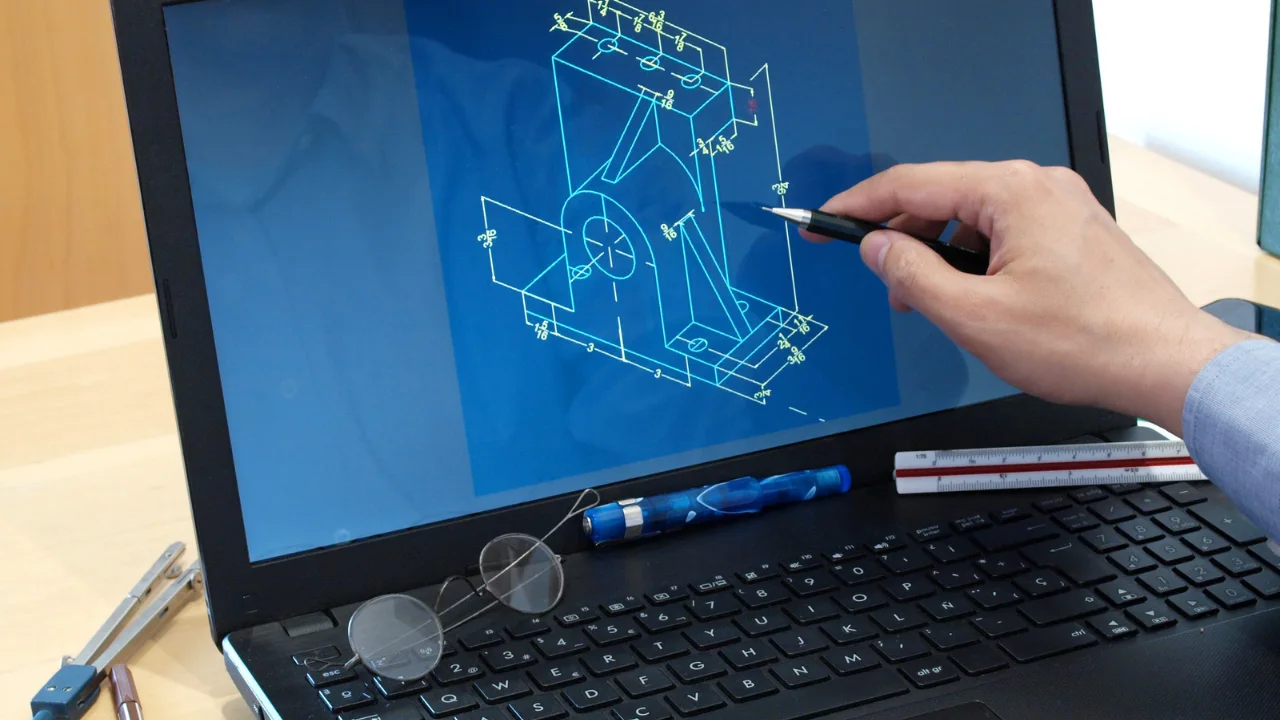
AeroChamp uses probe and laser CMM systems and other inspection tools to capture component geometry and dimensions. Inspection data is used to develop 2D drawings and 3D CAD models using AutoCAD, CATIA, SolidWorks, and Creo.
Prototype Development and Testing
Reverse-engineered aircraft components can be developed as prototypes for dimensional, functional, and performance evaluation. Test fixtures and jigs can be used where required to validate designs and identify necessary engineering modifications before production.
Manufacturing of Aircraft Parts
AeroChamp manufactures reverse-engineered components using VMC and multi-axis CNC machining, milling, wire cutting, laser cutting, water jet cutting, heat treatment, hardening, electroplating, and other applicable processes. Additive manufacturing and 3D printing are also available for suitable low-volume and non-critical components.
AeroChamp supports reverse engineering and development of electronic circuits and sub-assemblies, including digital design, PCB assembly, stencil application, pick-and-place assembly, and wave soldering. Where technically applicable, legacy analogue and relay-based circuits can be developed into modern solid-state designs.